Bar is the Name (Busto Arsizio)
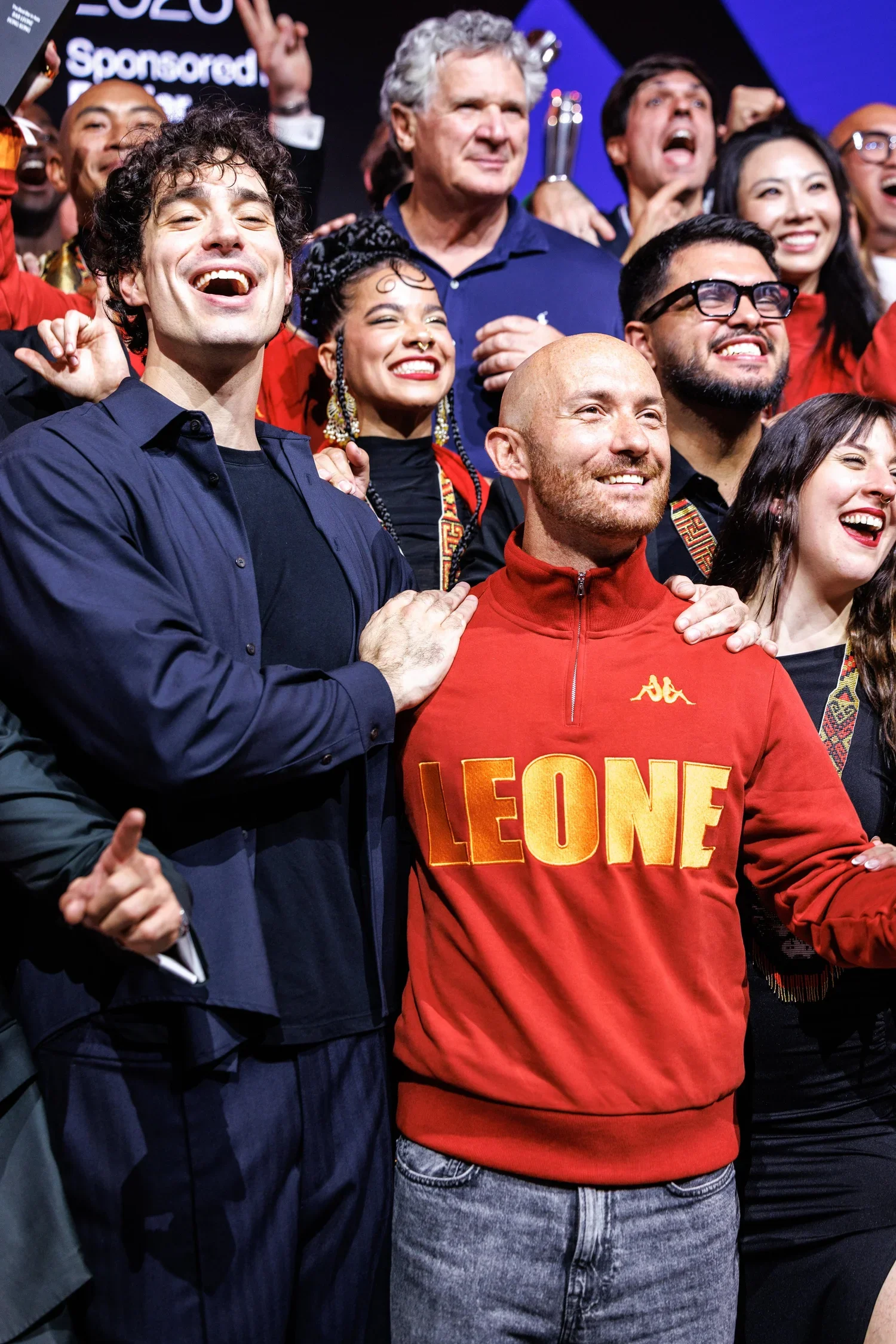
Bar is the Name team with the Season V menu
The name is the point. When Ambrogio Ferraro was looking for what to call his new bar in Busto Arsizio, he ran into an Italian legal quirk: you cannot simply name an establishment “bar” — that designation is protected. So he called it Bar Is The Name, and the mild provocation has stuck, because it says precisely what the place intends to be: not a restaurant, not a caffetteria, not a hybrid concept. A bar.
Ferraro, born in Gallarate in 1994, spent twelve years working in five-star hotels across Switzerland, London, Wiesbaden, and eventually at the Seta restaurant inside Milano’s Mandarin Oriental. He was a sommelier and front-of-house professional, not a bartender. When he decided to come home and open something of his own in 2022, he taught himself mixology from books, filled in the gaps, and opened Bar is the Name the same year. The result is a cocktail bar that operates with the service discipline of a luxury hotel and the informality of a neighbourhood local — a combination that turns out to be relatively rare in the provinces.
The space itself is direct: a long bar counter, comfortable wooden seating, and a generous outdoor area. What distinguishes the experience is the approach to the menu. Cocktails are not named with clever titles; they are named after their dominant flavour. If a drink tastes of mango and ginger, it is called mango and ginger. The customer is not expected to decode anything. Staff explain further only if asked.
Bar Is The Name has, from the start, operated on a theme-per-year basis. Previous editions moved through Lego House, Art Nouveau, La Belle Époque, and Jules Verne’s world of travel. With the fifth season — launched 19 March 2026 — the bar takes a different approach to how it structures its menu, replacing the four conventional seasons with four parts of a plant.
The seasonal manifesto, written by Ferraro and shared with guests, frames the new menu in terms of provenance, seasonality, and taste — described as the bar’s three founding principles. In a world where the connection to raw ingredients has weakened, the intention is to use the full anatomy of a plant rather than its most obvious parts: root, leaf, fruit, flower. Each part carries its own aromatic register; each drink within a given chapter shares a common character.
The symbolic dimension is equally deliberate. Each flavour, according to the bar’s philosophy, is meant to carry a mood — a small counterweight to the stress, anxiety, and low-level dissatisfaction that, the manifesto notes with some directness, constitute the background noise of contemporary life. The question left hanging at the end of the document — “And you, what flavour are you?” — is less a marketing line than a genuine invitation to pay attention to what you actually like.
Busto Arsizio is not the obvious place to open a serious cocktail bar. Ferraro's premise — that a city of 80,000 people would respond to quality, consistency, and straightforward communication — has been proved out over four years and five menu editions. The bar now places regularly in national rankings: a finalist across multiple Bargiornale Barawards categories including sustainability, menu design, and bar revelation, and recognised by Identità Golose, Italy's leading fine dining platform, for the future of mixology.
Interior at Bar is the Name
Ambrogio Ferraro
Four Seasons at Sea
Four Seasons I
On the first day of spring — and, not coincidentally, the 65th anniversary of the very first Four Seasons hotel opening its doors — a 207-metre superyacht slipped quietly out of port into the Mediterranean. It was, by any measure, quite an entrance.
The vessel is called Four Seasons I, and it is exactly what you’d expect from a brand that has spent six and a half decades perfecting the art of making people feel looked after. Ninety-five suites, no interior cabins, a staff-to-guest ratio of one-to-one, and a transverse marina that opens across both sides of the ship for direct sea access. Oh, and eleven restaurants!
To be clear, this isn’t Four Seasons slapping its name on someone else’s cruise ship. Four Seasons I was conceived from scratch, in partnership with Italian shipbuilder Fincantieri — the same storied yard that has built vessels for some of the most discerning operators in the world. The design brief was essentially: what would a Four Seasons hotel look like if it could move?
The answer, it turns out, involves floor-to-ceiling windows throughout, Tillberg Design of Sweden handling the naval architecture, Martin Brudnizki doing the social spaces, and Prosper Assouline providing creative direction. The reference point for the aesthetic was the legendary superyacht Christina O, though filtered through a contemporary lens.
All 95 suites feature generous indoor-outdoor living — terraces, many with private plunge pools — and not a single one is an interior cabin. The standout is the Funnel Suite, positioned at the forward-facing prow: nearly 10,000 square feet, with the largest contiguous piece of curved glass at sea wrapping around it in a sweeping panorama.
Back to those eleven restaurants. The centrepiece is Sedna, which hosts a rotating Chef-in-Residence series pulling talent from Four Seasons’ most acclaimed properties around the world — Christian Le Squer from Le Cinq in Paris, Guillaume Galliot from Caprice in Hong Kong, Paolo Lavezzini from Il Palagio in Florence, among others. Each engagement brings an immersive tasting menu designed around the voyage’s destinations, which is the kind of programme that makes you want to spend six months aboard just to cycle through the full roster.
Beyond Sedna, there’s Horizon Bar — open-air, overlooking the sea, with its own plunge pool — and Bar O, a design-forward lounge dedicated to craft cocktails and rare spirits. Both sound like places where an evening could very happily disappear.
For its inaugural season, the yacht explores the Mediterranean before heading to the Caribbean and Bahamas in winter. Thirty-two voyages across 52 sailings, visiting 130 destinations in more than 30 countries and territories. The itineraries mix the expected — Saint-Tropez, Bodrum, the Greek Isles — with the pleasingly off-piste: Hydra, Montenegro, the Croatian coast beyond the obvious stops.
A second vessel, Four Seasons II, follows in 2027. For now, Four Seasons I has the Mediterranean to itself.